Align structure, leadership and workforce capacity with business priorities.
HR CHAMP helps growing SMEs and mid-market organizations clarify executive reporting lines, authority boundaries, and headcount forecasts so the organization can operate effectively as the business evolves.

As businesses grow, restructure, or expand cross-border, informal management setups create structural friction. We address five core structural failure points:
Responsibilities overlap across departments, creating duplicated effort and missed operational handoffs.
Routine operational approvals consistently escalate to founders and C-suite executives, stalling execution.
Reporting lines reflect historical legacy setups rather than current strategic business priorities.
Mid-level management lacks a defined span of control, boundaries, and performance metrics.
Headcount additions are reactive, causing labor costs to outpace business output.
Redesigning reporting lines, management layers, and organizational relationships.
Deploying RACI frameworks, delegation protocols, and clear authority levels across leadership tiers
Structuring executive interfaces and management capacity.
Aligning headcount forecasts, skill requirements, and labor budgets with revenue goals.
Reorganizing workforce structures during acquisitions, market pivots, or cost-realignment phases to protect core operational delivery.
From Leadership Friction to Leadership Alignment.
Impact: Visibility on where decisions and accountability are breaking down.
Impact: Improved decision flow
Impact: The leadership team runs the structure itself. Routine decisions no longer reach the CEO, and the new structure holds through hiring and pressure.
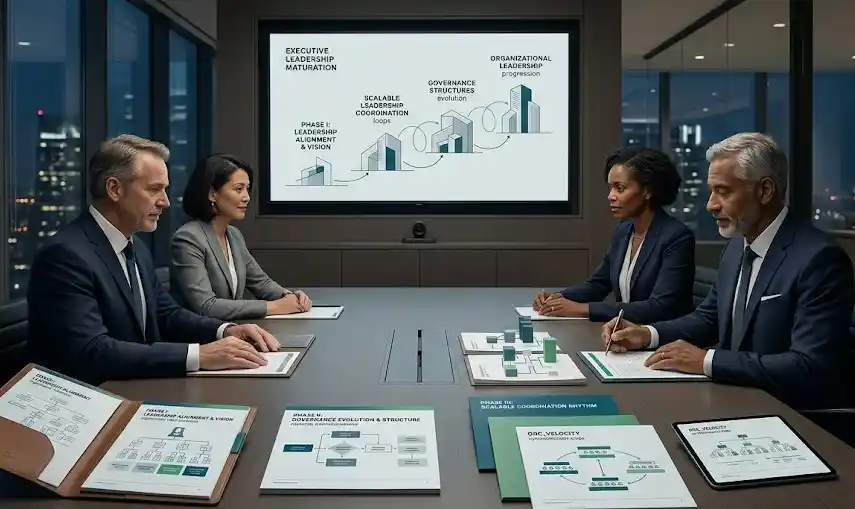
Clear ownership of roles and decisions, with faster cycles through delegated authority to qualified mid-level managers..
C-suite focus shifts from micromanagement to strategic decisions.
Headcount planning and talent budgets mapped directly to business milestones.
HR CHAMP supported us in recruiting a critical management role with professionalism, persistence, and thoughtful guidance throughout the process.
Nada’s strategic advice and commitment to quality made the experience both smooth and effective
Gabriel Jerkovic, VP Operations, MF Global, Croatia, Europe
Most engagements run on our 90-day implementation model.
An organization should review its structure when revenue growth plateaus despite added headcount, routine operational decisions stall at the C-suite level, or during major strategic shifts such as cross-border expansion, M&A integration, or market restructuring.
Organizational design builds the structure — setting clear reporting lines, roles, and responsibilities.
Workforce planning is about forecasting the headcount, skills, and labor costs required to achieve business goals.
We evaluate your current setup to fix reporting friction, eliminate founder bottlenecks, and clear up role confusion. We then build and implement a streamlined structure with clear decision-making, stabilizing operations without interrupting daily business.
Workforce planning replaces reactive hiring. It identifies critical talent gaps, predicts future skill shortages, and aligns recruitment schedules directly with revenue timelines and budget constraints. This ensures new hires solve real capacity gaps instead of adding unnecessary payroll cost.
Once your organizational structure and decision rights are established, ensure your daily policies match through our People Operations & Governance frameworks.
Explore Related Capabilities:

HR CHAMP builds people infrastructure for growing SMEs and mid-market companies.
Subscribe to receive our latest news directly delivered to your inbox
Copyright © 2026. All rights reserved.